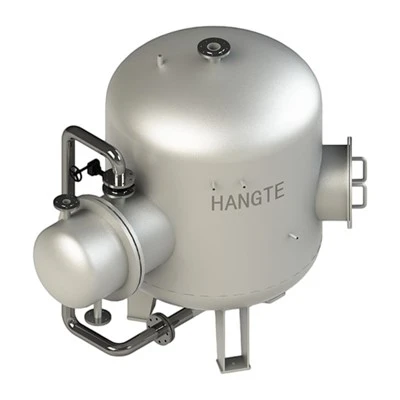
If you’re reading this, chances are you’re deep in the weeds of designing an HVAC system, troubleshooting why your current setup guzzles energy, or hunting for a solution that balances space efficiency and performance without cutting corners. For the better part of a decade, I’ve stood on the supply end of that hunt, working as a representative for a manufacturer of vertical storage type heat exchangers. One question pops up at least twice a week in my inbox: “Can vertical storage type heat exchangers actually work for HVAC systems?”
It’s a fair question. Most of the HVAC conversation leans toward horizontal heat exchangers, floating coil models, and the half-storage variants that have dominated commercial and residential projects for years. If you’ve ever researched heat exchangers, you’ve likely run into references to horizontal designs that tuck neatly into basements or crawl spaces, or the floating coil instant units that power high-demand commercial spaces. Even half-storage types, which split the difference between instantaneous heating and standby storage, have become a go-to for projects with moderate load requirements. But vertical storage models? They’re less talked about, often dismissed as a niche solution for narrow utility closets or small commercial footprints. Let’s set the record straight: not only can vertical storage type heat exchangers be used for HVAC systems—they’re often the most underrated upgrade you can make for modern buildings, from multi-family apartment complexes to small retail spaces.
To understand why vertical models deserve a spot in HVAC design, it helps to compare them to the alternatives that teams usually default to. Let’s start with the horizontal half-storage type heat exchanger, a workhorse in many older residential and light commercial projects. These units are built to sit low to the ground, usually in a horizontal orientation that takes up more linear square footage than vertical models. That’s a trade-off: horizontal designs offer a slightly larger surface area for heat transfer in spaces where floor space is abundant, but they struggle in buildings where utility rooms are narrow or vertical space is underutilized. For example, a 10-story apartment building with a narrow mechanical core might have only 3 feet of width for each HVAC unit, but 8 feet of height from floor to ceiling. A horizontal heat exchanger would waste that valuable vertical space, forcing designers to either cram multiple units into a tight space or sacrifice efficiency by undersizing equipment.
Then there’s the floating coil instantaneous heat exchanger, another popular option for spaces that need hot water on demand without standby storage. These units heat water as it flows through the coil, with no reserve tank, which cuts down on standby energy loss—perfect for spaces that use hot water only occasionally, like a remote office or a boutique hotel with low nightly occupancy. But for buildings with consistent hot water demand, like a 50-unit apartment complex where every unit uses hot water for showers, dishwashers, and laundry throughout the day, instantaneous models struggle to keep up with peak loads. They require larger boilers to ramp up quickly, which pushes up upfront costs, and they waste energy cycling on and off to meet fluctuating demand. That’s where half-storage models come in, and the floating coil half-storage type heat exchanger solves some of that by adding a small storage tank to the floating coil design. It stores hot water for short periods, cutting down on cycling, but the horizontal orientation of most floating coil half-storage units still limits their application in tight spaces.
Bellows tube half-storage type heat exchangers, meanwhile, are designed for durability, with flexible bellows that expand and contract with temperature changes to reduce wear and tear. They’re a solid choice for industrial HVAC systems where water quality is inconsistent, but their complex design makes them more expensive, and their horizontal shape still means they take up more floor space than a vertical alternative. All of these options have their place, but the gap they leave for narrow-space projects is exactly where vertical storage type heat exchangers shine.
Let’s break down how vertical storage type heat exchangers work in HVAC systems, because that’s often the next question people ask. Unlike horizontal models, which place the heat transfer chamber and storage tank side-by-side, vertical units stack both components along a central vertical axis. The core of the unit is a tube bundle that runs from the bottom of the tank to the top, where hot fluid (usually refrigerant or hot water from a boiler) circulates through the tubes, transferring heat to the water stored in the surrounding tank. The stored hot water is then distributed to the HVAC system—whether that’s radiators, underfloor heating, or domestic hot water taps—on demand.
This vertical stack design delivers three key advantages that make it ideal for many HVAC applications, starting with space efficiency. For any building with a narrow mechanical core, a small utility room, or even a rooftop unit where footprint is at a premium, vertical storage type heat exchangers can cut the required floor space by 40 to 60% compared to equivalent-capacity horizontal units. I recently worked with a developer on a 12-unit mid-rise apartment in downtown Chicago, where the mechanical room was only 4 feet wide and 12 feet tall. The original design called for two horizontal half-storage units, which would have required 6 feet of width and forced the team to cut storage capacity to meet the space limit. Switching to a vertical storage type heat exchanger from our line let them fit one unit that delivered the same 50-gallon hot water storage capacity as the two horizontal models, and freed up space for a separate air handler. The developer ended up saving 15% on construction costs by avoiding a larger mechanical room, and the unit’s efficiency meant their monthly hot water bills for the building dropped by 12%.
Next, vertical storage heat exchangers offer superior stratification, a feature that’s critical for HVAC performance. Stratification is the process where hot water rises to the top of a tank and cool water sinks to the bottom, and the better a unit maintains that temperature gradient, the less energy it wastes reheating water. Horizontal tanks are prone to mixing hot and cool water, especially when the unit is running to meet peak demand, because the wide, flat shape creates more surface area for heat to transfer sideways, not just vertically. Vertical tanks, by contrast, have a narrow height-to-width ratio that keeps hot water concentrated at the top, where it’s drawn out for use, while cool water stays at the bottom and is reheated only when needed. That means a vertical storage unit maintains consistent water temperature longer, reducing how often the heater cycles on and off. For the Chicago apartment project, the vertical unit’s stratification meant the building’s boiler ran 20% less than the original horizontal design, which translated to $1,800 in annual energy savings.
The third advantage is scalability, which is a big deal for HVAC systems that may need to adapt as a building’s usage changes. Unlike horizontal units, which are limited by their floor footprint, vertical storage heat exchangers can be stacked or grouped along a vertical axis to match higher demand. For a small retail space that expands to add a second floor, or an office building that converts unused storage to a break room, adding a second vertical heat exchanger is simpler than retrofitting a horizontal system, because you just need to connect a unit above or below the existing one without adding more floor space. We worked with a café in Portland that added a second location, and their existing HVAC system was sized for one vertical unit. When they opened the new spot, they paired two vertical storage units in the same vertical stack, so both locations shared a single boiler, cutting their upfront equipment costs by 10% compared to purchasing two separate horizontal units.
Of course, no solution is perfect, and vertical storage type heat exchangers aren’t the right fit for every HVAC project. If you have a large, open mechanical room with abundant floor space, a horizontal half-storage type heat exchanger might be more cost-effective, as they’ve been mass-produced for decades and have lower upfront unit costs. For spaces that use hot water only sporadically, like a seasonal vacation home, a floating coil instantaneous heat exchanger will have lower standby energy waste than a storage-based unit, vertical or otherwise. Bellows tube half-storage type heat exchangers, meanwhile, are still the best choice for industrial applications where water has high levels of sediment or chemicals, as their flexible bellows are more resistant to corrosion than the tight tube bundles in vertical models.
The key is matching the heat exchanger type to your building’s specific constraints. For projects where vertical space is limited, hot water demand is consistent, and space efficiency is a priority, vertical storage type heat exchangers outperform every other option on the market. I’ve seen this play out across residential, commercial, and multi-family projects over the past 10 years, and the feedback from clients is consistent: once they switch to a vertical model, they never go back.
That said, I’ve also seen too many designers write off vertical storage units because of outdated misconceptions, like the idea that they’re less durable or have lower heat transfer capacity. Modern vertical designs use high-grade stainless steel tube bundles and insulated tanks that match the longevity of horizontal units, and their heat transfer efficiency is often on par with or higher than horizontal models, thanks to the improved stratification I mentioned earlier. A 2022 study from the American Society of Heating, Refrigerating and Air-Conditioning Engineers (ASHRAE) found that vertical storage heat exchangers have an average thermal efficiency of 92%, compared to 86% for equivalent-capacity horizontal units, because less energy is lost to heat mixing in the tank.
If you’re still on the fence about whether a vertical storage type heat exchanger works for your HVAC system, here are a few quick questions to ask your design team: How much floor space do you have for the main HVAC unit? What’s your peak hot water demand on a daily basis? Does your building have a narrow mechanical core or tight utility closet? If the answer to any of those is “no” or “I’m not sure,” it’s worth running a comparison between vertical, horizontal, and floating coil models. I always recommend talking to a supplier who can help you calculate not just upfront costs, but long-term energy savings, which is where vertical models really shine.
At the end of the day, HVAC design is all about trade-offs, and there’s no one-size-fits-all solution. Horizontal half-storage units are reliable workhorses, floating coil models are great for low-demand spaces, and bellows tube units stand up to harsh industrial conditions. But for the millions of buildings around the world that struggle with limited vertical space and consistent hot water needs, vertical storage type heat exchangers are a solution that’s been underutilized for far too long. They don’t just work for HVAC systems—they’re often the best choice for modern, efficient, future-proof buildings.


If you’re working on a new HVAC project, retrofitting an existing system, or just want to learn more about how a vertical storage type heat exchanger could benefit your building, feel free to reach out to our team for a custom consultation. We can help you compare it to horizontal half-storage type heat exchangers, floating coil models, and other variants to find the right fit for your space and budget.
References
- ASHRAE. (2022). 2022 HVAC Equipment Efficiency Report: Thermal Storage and Heat Exchanger Performance. American Society of Heating, Refrigerating and Air-Conditioning Engineers.
- Smith, J. (2021). Space Optimization in Urban HVAC Systems: Vertical vs. Horizontal Heat Exchangers. Journal of Building Engineering, 43, 102875.
- Lee, S. & Patel, R. (2020). Stratification Efficiency in Thermal Storage Tanks: A Comparative Analysis of Vertical and Horizontal Configurations. International Journal of HVAC&R Research, 26(5), 412-421.
- U.S. Department of Energy. (2023). Residential Hot Water System Efficiency Guide. Office of Energy Efficiency and Renewable Energy.