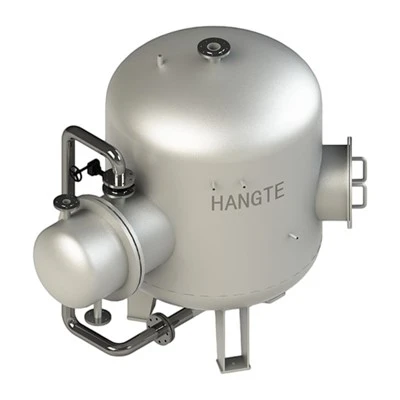
Alright, let’s cut to the chase—if you work with heating, cooling, or industrial fluid systems, you’ve probably stared at a frozen expansion tank at 2 a.m. and wondered, “Will this thing burst on me?” As a supplier of expansion tanks (The Expansion Tank, for anyone new here), I get this question all the time. It’s not just a random worry, either—frozen tanks are a real, messy headache that can lead to downtime, repair bills, and even safety hazards if you don’t get the facts right. Let’s break this down like we’re chatting shop over a coffee, no fancy jargon that makes your eyes glaze over.
First, let’s recap what an expansion tank actually does, because if you skip this part, you’ll never get why freezing is a big deal here. Most of us know they’re for hot water systems, but they’re also in HVAC, industrial process lines, and even some plumbing setups. Their whole job? They give the water (or other fluid) somewhere to go when it heats up and expands. Without one, the pressure would skyrocket—think of a pressure cooker without a vent, except for your pipes instead of food. Now, the tank has a rubber bladder inside it, usually filled with air (or nitrogen) on one side and the system fluid on the other. That bladder is key—it keeps the pressure in check by stretching or squeezing as the fluid expands or contracts.
So why does freezing make this tank tick? Let’s talk water freezing: when water turns to ice, it doesn’t just get cold—it expands. A lot. Like, 9% volume expansion when it goes from liquid to solid. That’s why pipes burst in winter, right? Now, put that same water inside an expansion tank, and you’ve got a similar scenario—but with extra variables from the tank’s design. The bladder is a big one. If the bladder’s punctured, old, or wasn’t installed right, the air side can mix with the fluid side. When that happens, the system pressure isn’t buffered anymore, and the water in the tank is just sitting there—no room to expand without pushing against the tank metal itself.
Wait, but does every frozen expansion tank burst? Nah, that’s not a guarantee. Let’s get into the science of when it’s a risk. First, where is the tank located? If it’s in a heated basement, it’s never getting cold enough to freeze. But if it’s in an unheated attic, outdoors, or a crawl space that drops below 32°F (0°C), then you’re in the danger zone. The age of the tank matters too—old tanks can have rusted metal that’s weaker, or bladders that have lost their flexibility over time. A brand-new, well-built tank might handle a tiny bit of ice expansion, but if the fluid freezes solid, all that pressure has to go somewhere.
Here’s the part I see people mess up: when the tank freezes, the pressure on the metal isn’t just from the ice expanding. It’s also from the trapped fluid that didn’t turn to ice. Even partially frozen tanks can have liquid water stuck between the ice and the bladder, and as that remaining water cools further, it contracts, pulling away from the metal. Wait—does that create a vacuum? No, not really, but when the ice starts to expand, it pushes both the bladder and the tank shell. If the metal’s thin (like on some cheap tanks) or already compromised by corrosion, that’s when the crack happens. I’ve seen this first-hand with some DIY-installed tanks that used thin-gauge steel—they’d freeze, split, and flood the customer’s basement before the morning shift.
Now, let’s talk about what makes an expansion tank different from other pressure vessels, because a lot of folks mix them up. For example, a Rotary Vacuum Dryer isn’t the same as an expansion tank—though both handle pressure, the dryer’s job is drying materials, not buffing fluid expansion. A Supply Manifold is for routing fluid to different parts of a system, not storing expanding fluid. Same with Steam Distribution Header—distributes steam, not holding it back. An Air Receiver Tank stores compressed air for tools, which is a totally different pressure profile, and a Return Manifold collects fluid back to the main system. All these have their own freeze risks, too, but expansion tanks are unique because their whole purpose is managing fluid that’s always changing volume.
Wait, let’s get specific about burst scenarios. Suppose you have a hot water system where the pump failed, so the water isn’t circulating. The expansion tank’s in an unheated garage, and the outside temp drops to 20°F. The water in the tank cools and starts to freeze. The bladder can’t stretch to accommodate the expanding ice—so the ice pushes against the metal shell. If the tank’s already got a rust spot from years of use, the metal at that spot can’t withstand the extra pressure. Cracks form, and suddenly you’ve got a tank leaking ice and water all over your equipment. I can’t tell you how many times I’ve had customers call in a panic after this exact thing happened.


But here’s the good news: it’s preventable. As a supplier, we’ve got customers that deal with this every winter, and they’ve found simple fixes. First, insulate the tank and the pipes leading to it. That’s basic, but you’d be surprised how many people skip it. If the tank is outside, get a heated jacket for it (not the kind you wear, the kind for pipes/tanks—we can point you in the right direction). Second, check the bladder pressure regularly. If the bladder’s not holding air, the tank can’t do its job, and that’s a freeze waiting to happen. Third, make sure the tank is sized correctly. Too small, and the pressure spikes more when fluid expands; too big, and it’s not as responsive to temperature changes.
Wait, can a frozen tank not burst? Absolutely. If the fluid only partially freezes, the ice expands a little, and the metal is thick enough to take the pressure. Or if the tank’s in a heated space, so it never gets cold enough to turn to solid ice. But here’s the thing—why take the risk? Even if it doesn’t burst, a frozen expansion tank can damage the bladder, leading to bad pressure regulation later. That means your system will work harder, leading to higher energy bills, or worse, a pipe burst somewhere else. It’s a domino effect no one wants to deal with.
Let me address a common myth I hear: “If the tank has a pressure relief valve, it will let the pressure out.” Nope. Pressure relief valves are for when the system overheats, not for ice expansion. Those valves open at much higher pressures than what frozen water creates. By the time the relief valve would kick in, the ice has already done its damage. So don’t rely on that—think of it as a backup, not a solution.
Another point: different fluids freeze differently. If your system uses antifreeze instead of plain water, it has a lower freezing point. That’s a game-changer. Ethylene glycol antifreeze freezes around -10°F, propylene glycol around -50°F. But even with antifreeze, if the temperature drops way below that, it will still freeze. And when antifreeze freezes, it expands too—just not as much as water. So it’s still a risk, just a smaller one. We always recommend checking the antifreeze concentration every year to make sure it’s still providing enough freeze protection.
Now, I want to talk about how we here at The Expansion Tank approach this. We don’t just sell tanks—we help customers pick the right one for their system, whether it’s a residential HVAC, industrial process, or commercial plumbing. We’ve seen all the mistakes: undersized tanks, wrong materials (thin steel vs. heavy-gauge), improper installation. That’s why we take the time to walk through your setup with you. Because a tank that’s installed wrong, even if it’s the best on the market, is going to fail when it freezes.
Let’s circle back to the original question: Can a frozen expansion tank burst? The short answer is yes, but it’s not inevitable. It depends on three main things: location (is it getting cold enough?), condition (is the metal/bladder intact?), and setup (is it sized and installed correctly). If you skip the insulation, don’t check the bladder, and put it in an unheated space, you’re taking a big risk. But if you take simple preventative steps, you can almost eliminate that risk.
Here’s the kicker: I’ve been in this game for years, and the biggest mistakes happen when people think “it won’t happen to me.” Last winter, a commercial customer called us at 5 p.m.—their tank froze and burst, flooding their production line. They thought their insulated tank was enough, but the insulation had shifted over time, exposing the tank to a cold snap. That’s a $10k+ repair they could’ve avoided with a quick check.
So what should you do now? If you’ve got an expansion tank, go check its location. Is it in a cold spot? Insulate it. Check the insulation—does it look like it’s holding up? Test the bladder pressure (your system manual can tell you how, or you can call us for help). If the tank is over 10 years old, consider replacing it—old metal is way more prone to cracking when frozen.
And if you’re shopping for a new expansion tank? Don’t just go for the cheapest one. Look for heavy-gauge steel, a quality bladder, and make sure it’s sized for your specific system. We’ve got a range of tanks for every application, and our team is here to help you find the right fit. We also work with industrial customers that need compatible pressure vessel components—if you’re looking for parts related to your system’s pressure management, like those mentioned (Rotary Vacuum Dryer, Supply Manifold, Steam Distribution Header, Air Receiver Tank, Return Manifold), we can point you to the right resources too.
At the end of the day, frozen expansion tanks don’t have to be a nightmare. It’s about understanding the science, taking simple steps to protect your equipment, and not cutting corners on quality or installation. I’ve seen too many people lose time and money because they ignored the freeze risk—let’s make sure that’s not you this winter.
If you’re dealing with a frozen tank, need a replacement, or just have questions about keeping your system running smoothly, reach out. We’re here to help.
References:
- Hydronics Engineering: Expansion Tanks and Freeze Protection (2022)
- ASME Pressure Vessel Code Guidelines for Fluid System Components (2021)
- Residential HVAC System Maintenance: Preventing Winter Freeze Damage (Energy Star, 2023)
- Industrial Process Fluid Handling: Freeze Thaw Effects on Pressure Equipment (Journal of Pressure Vessel Technology, 2020)