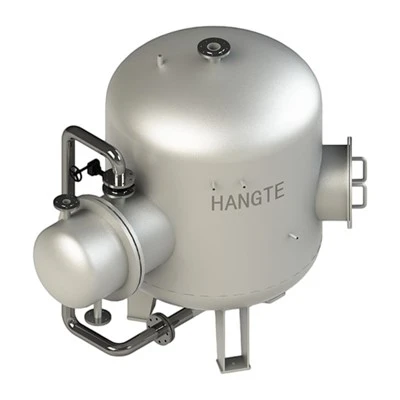
Can I install an expansion tank myself? That’s a question I get asked at least a dozen times a week as a supplier at The Expansion Tank, and it’s one that’s important to answer clearly—because while the DIY route might seem tempting, there’s a lot more to it than just twisting a few pipes together. Let’s break this down from my perspective, having spent years working with pressure vessels of all kinds, from expansion tanks to Air Receiver Tanks, Chemical Reactors, and more. I’ve seen what happens when someone skips the proper steps, so I want to be honest about the risks and realities here.


First, let’s start with the basics: what an expansion tank does. If you’re in a home heating system, a plumbing setup, or even a small industrial loop, water expands when it heats up. That extra volume needs somewhere to go—without it, your pipes can build dangerous pressure, leading to leaks, burst pipes, or even damage to your boiler. That’s where an expansion vessel comes in, and it’s not just a random tank you pick up at a hardware store; it’s a pressure vessel designed specifically to handle the pressure fluctuations of your system.
So, can you do it yourself? The short answer is: maybe, but only if you have the right skills, tools, and understanding of pressure system safety. And even then, I’d caution against it if you’re not comfortable with plumbing basics. Let’s get into the details.
First, let’s talk about the necessary skills. Installing an expansion tank isn’t like hanging a picture frame. You need to know how to work with your system’s existing pipes, shut off the water correctly, bleed air properly, and test for leaks. If you’re working on a residential hot water system, for example, you’ll need to drain a portion of the water, which means knowing how to safely isolate the boiler without causing damage. If you’re working on a small industrial setup, the stakes are even higher—wrong installation can lead to pressure buildup that’s a safety hazard.
Tools matter too. You’ll need pipe wrenches, Teflon tape, a pressure gauge, a pump to adjust the tank’s pre-charge pressure (that’s the air pressure inside the tank before it’s connected to the system), and maybe a soldering torch if your pipes are copper. If you’re missing any of these or don’t know how to use them, DIY might not be the best call. I’ve had customers come to us after a failed DIY install where the tank was leaking because they didn’t wrap the Teflon tape correctly, or the pre-charge pressure was wrong, so the tank wasn’t working at all.
Then there’s the pre-charge step, which is critical. Every expansion tank we supply at The Expansion Tank has a specific pre-charge pressure listed, and it has to match your system’s static pressure. If the pre-charge is too high, the tank won’t expand to hold the extra water; if it’s too low, the water will push into the air side, causing the tank to log (“waterlogged”) and stop working. Adjusting that pre-charge requires a pressure gauge and sometimes a small air pump—something not every DIYer has on hand. It’s a step that’s easy to mess up, and if you do, you’ll end up with a tank that’s useless, or even causes more pressure problems.
Safety codes are another big factor. Most residential and commercial plumbing systems are governed by local building codes, which often require that pressure vessels like expansion tanks are installed by a licensed professional. Why? Because these codes are there to prevent accidents. A poorly installed expansion tank is a pressure hazard—if it fails, it can burst, sending water or even pressurized air flying. For larger industrial pressure vessels, like Buffer Tanks or Rotary Vacuum Dryers, the regulations are even stricter, and professional installation is almost always required. Even for smaller residential expansion tanks, cutting corners on code compliance can void your warranty, and if something goes wrong, you could be liable for damage to your property or others.
I also want to mention the difference between a standard expansion tank and the specialized ones we supply. At The Expansion Tank, we don’t just sell generic tanks—we carry Expansion Vessels designed for specific applications: hot water heating, chilled water, industrial process systems, and more. Each of these has different pressure ratings, sizes, and installation requirements. A tank that works for a home heating system might not work for a small brewery’s process loop, for example. Trying to install the wrong tank, even if you do it correctly, won’t solve your problem. That’s why it’s important to consult someone who knows your system to pick the right tank—and that’s where a professional or our team at The Expansion Tank comes in.
Let’s talk about the costs, too. Some DIYers think installing it themselves will save money, but if you make a mistake, you could end up paying more than a professional install would have. For example, a friend of mine tried to install an expansion tank on his boiler a few years back, messed up the pre-charge, and within a month, the pressure relief valve opened, leaking water all over his basement and damaging his furnace. The repair cost way more than a professional installation would have, and he also had to replace the ruined tank. That’s a common story we hear. On the flip side, a professional will come in, make sure the pre-charge is correct, test the system, and give you a warranty that covers the install—something DIY can’t always guarantee.
So when is DIY a good idea? If you’re a experienced plumber, have all the right tools, understand your system’s pressure specs, and are comfortable working with pressurized water and pipes, then it might be possible. But even then, I’d recommend double-checking the installation steps with a supplier or a professional to make sure you’re not missing something. For most people, though, especially if you’re working on your home’s main heating system, hiring a licensed technician is the smarter, safer choice.
If you’re not sure whether to DIY or hire a pro, here’s a quick checklist:
- Do you know your system’s static pressure? (You’ll need to check your boiler’s manual or use a pressure gauge.)
- Do you have the tools to adjust the tank’s pre-charge?
- Are you familiar with local plumbing codes for pressure vessel installation?
- Do you feel comfortable isolating your system, draining water, and working with pipes without leaks?
If you answered no to any of these, it’s best to reach out for help.
At The Expansion Tank, we get it—people want to save money and feel self-sufficient. But we also care about safety, because a bad install isn’t just a hassle; it’s a risk. That’s why we’re always happy to answer questions over the phone or via our website, help you pick the right expansion vessel for your needs, and connect you with qualified installers if you don’t want to do it yourself. We work with all kinds of pressure systems, from small residential setups to larger industrial ones, so whether you need a tank for your home, a Chemical Reactor side loop, or an Air Receiver Tank accessory, we’ve got you covered.
If you’re ready to get the right expansion tank for your system, or you have more questions about installation, feel free to get in touch with our team at The Expansion Tank to discuss your needs and find the best solution for you.
References:
- American Society of Mechanical Engineers (ASME). (2020). Boiler and Pressure Vessel Code.
- International Association of Plumbing and Mechanical Officials (IAPMO). (2021). Uniform Plumbing Code.
- The Expansion Tank. (n.d.). Product Specifications: Expansion Vessels for Residential and Industrial Applications. Retrieved from internal company product database.
- Occupational Safety and Health Administration (OSHA). (2019). Pressure Vessel Safety Guidelines for General Industry.