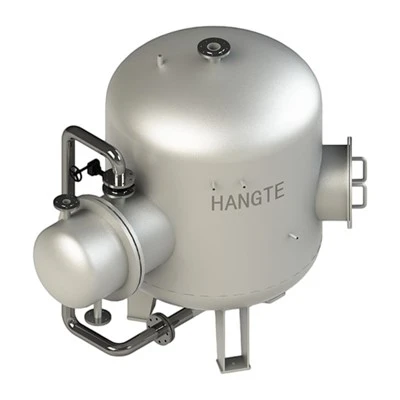
If you’ve ever stood in the middle of a busy winter morning, waiting for hot water to fill your shower and wondering why your heating system’s running all over the place, you might be dealing with an inefficient heat exchanger. As a supplier who’s worked with these units for years, I can tell you that not all heat exchangers are made equal—and the vertical storage type is a total game-changer for heating systems that struggle with balance, reliability, and energy waste. Let’s break down what this unit does, how it fits into a typical heating setup, and why it’s often the unsung hero of homes and small commercial spaces that rely on steady, consistent heat.
First off, let’s get on the same page about what a vertical storage type heat exchanger actually is. Unlike your basic instantaneous unit that heats water on demand and runs nonstop when you need warm water, this is a hybrid that stores heated water while still transferring heat from a primary source (like a boiler) to the water you use. The “vertical” part means it’s tall and narrow, which is key to how it works compared to bulkier, wide horizontal models. A lot of folks mix these up with other storage-style exchangers, so let’s clarify: if you’re curious about other common storage options, check out our other models, like the horizontal storage type heat exchanger, which’s built for spaces with limited vertical floor area, or the vertical half storage type heat exchanger for smaller-scale heating needs. There’s also the plate-shell storage type heat exchanger for higher-demand commercial setups, and even bellows tube instantaneous heat exchanger for systems where on-the-spot heating is non-negotiable. But today we’re laser-focused on the vertical storage version, since that’s our bread and butter, and it fills a unique niche that most other units can’t.
So what’s its main role in a heating system? Let’s start with the big picture: heating systems have two main jobs—keeping your building warm, and providing hot water for taps/showers. Most standard setups use a single boiler that jumps back and forth between heating the building and heating domestic hot water, which leads to all sorts of inefficiencies. The vertical storage type heat exchanger splits that load, acting as a middleman that transfers heat from the boiler to a stored reserve of hot water, so the boiler only runs when it needs to recharge that reserve, not every time you turn on a faucet or the thermostat kicks in.


Wait, let’s get technical but keep it real—no stuffy engineering jargon here. The vertical design means the storage tank is stacked vertically, so hot water stays at the top and cold sinks to the bottom naturally, thanks to buoyancy. That’s called “thermal stratification,” and it’s a huge win. If you’ve ever had a water heater that gives you a minute of hot water then turns lukewarm, that’s because stratification is bad. The vertical exchanger’s tall tank keeps layers separate: the top is always ready for use (it’s full of pre-heated water) and the bottom only gets cold water when the reserve is low. So when you open the hot tap, you get consistent temperature without the boiler firing up every two minutes. That cuts down on start-stop cycles, which waste energy and wear out parts way faster.
Another key role: balancing heat demand between space heating and domestic hot water. Let’s say it’s 7 a.m. in a house with three people. Everyone’s taking showers, the thermostat’s cranked, and someone’s running the dishwasher. A regular boiler would fire up flat-out, maybe struggling to keep up with all the demand, leading to either cold showers or a freezing living room. The vertical storage exchanger solves this by storing a large volume of pre-heated water, so when you open the tap, you’re pulling from that reserve, not draining the boiler’s immediate supply. The boiler only needs to recharge the storage tank slowly during off-peak times, like when you’re at work or asleep, when there’s less overall demand. That load shifting is where the energy savings really kick in—we’ve had customers tell us their gas bills dropped 20-30% after switching to a vertical storage unit, and that’s not because they stopped using heat, it’s because they stopped wasting it on unnecessary boiler runs.
Let’s talk about space heating specifically, too. If your system uses radiant floors or baseboard heaters, the vertical storage exchanger works with the boiler to maintain a steady supply of heated fluid (water or antifreeze) to those circuits. The storage tank acts as a buffer—if the boiler is producing more heat than the space needs at any given time, that excess heat is stored in the vertical tank instead of being vented out the chimney. That buffer means the boiler can run at its most efficient firing rate, not turning on and off whenever the thermostat calls for a little extra heat. It’s like having a thermal battery for your heating system, and the vertical design makes that battery compact enough to fit in a basement corner, not taking up half the garage like a big horizontal storage unit would.
Wait, what about smaller vs. larger spaces? A lot of people assume vertical storage is only for big commercial buildings, but nope—we sell a lot of these to single-family homes and small apartment complexes. The narrow footprint is perfect for old homes where basements are tight, or for apartments where you can’t install a huge horizontal unit without remodeling. Unlike the horizontal half storage type heat exchanger, which’s meant for partial load use, the vertical full storage (wait, no, don’t get that mixed up with half—half is a smaller version) is scalable, so we can size it for a 1,500 sq ft home or a 10,000 sq ft office.
Now, let’s talk about common myths, because I get asked these all the time. First: “Is it less efficient than instantaneous exchangers?” No, not when you account for real-world use. Instantaneous units (like the bellows tube one we sell) are great, but they have to heat water on demand, which means they run at full blast every time you use hot water, even if you only need a small amount. The vertical storage exchanger pre-heats water during off-peak hours, when energy is often cheaper anyway, and uses the boiler’s efficiency peak instead of making it work overtime for short, frequent uses. Second: “Does it take longer to get hot water?” Only if it’s sized wrong. A properly sized vertical storage unit has enough reserve that you get hot water within 2-3 seconds of turning on the tap, same as any other good unit. The stratification we talked about earlier means the top layer is always hot, so you don’t have to wait for cold water to cycle through the pipes.
Another big role: reducing maintenance. Because the boiler isn’t cycling on and off as much, parts like the burner, pump, and valves last longer. The vertical tank is also less prone to sediment buildup than horizontal tanks, thanks to the stratification—sediment sinks to the bottom layer, which is rarely used, so you don’t have to flush the system as often. We recommend flushing every 2-3 years for our vertical units, vs. every year for standard water heaters, which saves time and money in the long run.
Let’s put this into a real example. Last year, we worked with a customer in Chicago who had a 10-year-old heating system that was costing them $180 a month in gas, and their showers would go cold halfway through because the boiler couldn’t keep up with demand. They installed a vertical storage type heat exchanger, and three months later their gas bill dropped to $125 a month, and they haven’t had a cold shower since. Why? The unit stores 80 gallons of hot water, pre-heated overnight when energy rates are lower, and during the day, the boiler only runs to top up the reserve if someone uses a lot of hot water (like running a load of laundry and a shower at the same time). The stratification kept the hot water at the top, so every tap got consistent heat, and the boiler stopped short-cycling, which was the biggest waste.
Now, let’s compare it to similar products to show where it stands. The plate-shell storage type heat exchanger is great for high-heat commercial applications, like large office towers, because it transfers heat really efficiently at scale. The horizontal half storage type heat exchanger is good for small apartments, but it doesn’t hold as much reserve, so it’s not ideal for busy households. The horizontal storage type heat exchanger works well in spaces with plenty of floor space, but in homes where basement space is tight, the vertical unit is a no-brainer.
Wait, let’s get into the nitty-gritty of how it integrates into a system, so you can see the role clearly. A standard heating system has four main components: boiler, pump, heating circuits (radiators, radiant floors), and domestic hot water taps. Adding a vertical storage heat exchanger as a buffer between the boiler and these two circuits means the boiler doesn’t have to split its attention between heating space and hot water. Instead, the boiler heats the water in the vertical exchanger’s tank, and then two separate pumps send heated water to the heating circuits and hot water taps as needed. That decoupling is what makes the system so much more flexible—if the only demand is space heating, the hot water circuit doesn’t turn on, and vice versa. The vertical tank acts as a middleman that smooths out all the peaks and valleys in demand, so the boiler can operate at its optimal efficiency, usually around 90% or higher, which is way better than a boiler that’s cycling on and off at 60% efficiency.
What about for off-grid systems? A lot of our customers are in rural areas where they use solar or wood-fired boilers. The vertical storage exchanger is perfect here because it can store heat from the boiler even when the boiler isn’t running, so you don’t waste the heat produced during the day. A wood boiler, for example, only runs every few hours, so storing that heat in the vertical tank means you have hot water and heat overnight without having to stoke the fire every few hours. That’s another big role: it’s a heat storage medium that extends the usefulness of your primary heat source, whether that’s natural gas, solar, wood, or propane.
Now, let’s talk about installation. A lot of people think vertical units are hard to fit, but they’re actually designed to replace standard water heaters or buffer tanks. The vertical design means it takes up about a third of the floor space of a horizontal tank with the same volume, so you can usually install it in the same spot where your old water heater was. We provide step-by-step installation guides for every unit, and our team can help you size it based on your home’s square footage, number of people, and hot water usage.
But wait, it’s not just for homes. We’ve installed these in small cafes, apartment complexes, and even small gyms. A local café here in Portland had a problem where their boiler would run nonstop during morning rush hour, when they were making lattes, steaming milk, and washing dishes. The vertical storage exchanger stored hot water overnight, so during rush hour, they were pulling from the reserve instead of firing up the boiler constantly, cutting their gas use by 25% and making the boiler last longer. That’s the role of the vertical storage type heat exchanger, no matter the size: it optimizes heat production, reduces waste, and makes your heating system more reliable.
If you’re reading this and thinking, “This sounds like what I need for my heating system,” we’re here to help. Whether you’re replacing an old water heater, upgrading your boiler, or trying to cut down on energy bills, we can walk you through the best vertical storage unit for your space, compare it to other options like the ones we mentioned (plate-shell, horizontal half, etc.), and answer any questions you have. Just reach out—we don’t do pushy sales, we just help people find the right heating solution that works for their needs.
When it comes to heating systems, most people focus on the boiler or the thermostat, but the vertical storage type heat exchanger is the component that makes everything work together efficiently. It solves the biggest pain points of standard systems: inconsistent hot water, high energy bills, frequent boiler repairs, and tight installation space. It’s not a flashy part, but it’s the kind of component that makes your heating system feel like it’s working for you, not against you.
References
- American Society of Heating, Refrigerating and Air-Conditioning Engineers (ASHRAE). (2021). Heating, Ventilating, and Air-Conditioning Applications Handbook.
- International Energy Agency (IEA). (2022). Heat Exchanger Efficiency in Residential Heating Systems.
- U.S. Department of Energy. (2023). Residential Water Heating and Space Heating Efficiency Guide.
- European Committee for Standardization (CEN). (2020). Standards for Thermal Storage in Heating Systems.