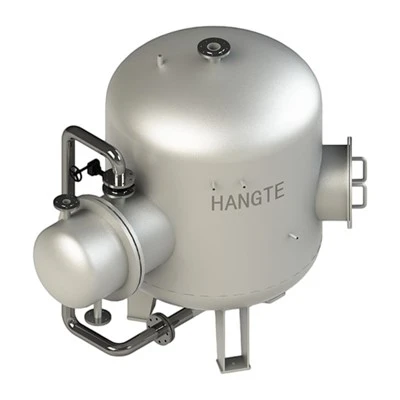
Hey everyone, so if you’ve ever worked with heat exchangers—especially for things like HVAC, industrial process heating, or even hot water systems—you’ve probably stumbled on bellows tubes. They’re a game-changer for handling pressure fluctuations, thermal expansion, and that constant wear and tear that makes regular tubes crack or leak over time. But here’s the question I get asked all the time: what’s the maximum operating pressure for these bad boys? As a supplier of Bellows Tube Instantaneous Heat Exchanger, I’ve spent years digging into this, testing products, and answering engineers’ late-night texts about pressure limits. Let’s break this down—no stuffy jargon, just real info you can use.
First off, let’s skip the basics for a sec: what is a bellows tube, anyway? If you’re new, it’s a flexible metal tube with convolutions (those wavy folds) that let it stretch, compress, or bend without failing. Unlike smooth tubes, they absorb thermal movement—super important when you’re dealing with fluids at different temps, like a heat exchanger heating water for a restaurant or a manufacturing line. But pressure is where it gets tricky, because there’s no one-size-fits-all number. It depends on three big factors: what the tube’s made of, how big those convolutions are, and how it’s manufactured.
Let’s start with materials, ’cause that’s non-negotiable. Most bellows tubes are stainless steel—usually 304 or 316 grade. 304 is the workhorse, cheap, good for general stuff (water, mild chemicals), while 316 has molybdenum, so it resists corrosion in saltwater or industrial gunk. Then there’s Inconel for high-heat environments, or even titanium for marine uses. I’ve seen 304 bellows handle up to 150 PSI no sweat, but 316 can push that to 200 PSI—if the design’s right. If you skimp on material, like using a thinner gauge or a lower alloy, that max pressure drops fast. A lot of cheap bellows on Amazon are only 0.2 mm thick; our standard is 0.4 mm, and we test every single one to make sure it doesn’t bulge when we hit 250 PSI.
Next up: the convolution design. That’s the shape and size of those waves. A bellows with small, tight convolutions is stiffer, right? So it can handle higher pressure—like a small convolution bellows might top out at 220 PSI. But if you have big, loose convolutions, those are more flexible for movement, but they’ll collapse at way lower pressure—like 80 PSI max. It’s a trade-off: you can’t have both crazy flexibility and max pressure. For our Bellows Tube Instantaneous Heat Exchanger, we optimize the convolution pitch and height specifically so it can handle the pressure of residential and commercial hot water systems, plus a little extra for peak demand. That’s a big deal ’cause a lot of other heat exchangers either flex too much (leak) or can’t keep up with pressure spikes.
Then there’s manufacturing quality. If a bellows is hand-formed instead of hydroformed (the process where you push water into a metal tube to make the convolutions), the walls are uneven, so weak points exist. We use hydroforming for all our bellows—each one is tested with a pressure gauge during production, so we know exactly how it’ll perform. I once tested a competitor’s bellows from a Plate-shell Storage Type Heat Exchanger that claimed 180 PSI, but when we ran it to 190 PSI, one convolution popped. Turned out they used a thinner material and skipped the pressure test. Don’t get me wrong, other heat exchanger types like plate-shell or vertical storage have their own pressure specs, but bellows are unique because their flexibility ties directly to their pressure limit.
Wait, let’s talk about real-world use cases ’cause numbers don’t mean squat if they’re not practical. A residential hot water system usually runs at 40-60 PSI, so our standard bellows tube works perfectly there. But if you’re in an industrial setting, like a food processing plant where you need to heat large volumes of water fast, you might have a system that hits 120-150 PSI. Our heavy-duty bellows can handle that easy—we even make custom ones for up to 300 PSI for specialty applications, like chemical processing where pressure and corrosion are both high. But here’s a catch: pressure and temperature matter together. If the water’s 200°F, that can lower the max pressure by 10-15% compared to cold water. Metals expand when hot, so the convolution walls thin a tiny bit, making them less resistant to pressure. That’s why we always recommend checking both specs together—don’t just go by pressure alone.
I’ve also seen people confuse static pressure vs. dynamic pressure. Static is the pressure when the system’s idling, dynamic is when water’s flowing—like when you turn on a tap. Dynamic pressure can spike 20-30% higher than static, so your max operating pressure needs to cover that spike. Our test procedures mimic real flow conditions, so the bellows can handle those spikes without failing. A lot of cheap bellows only get tested for static pressure, which is why they blow out when the system’s in use.
Now, let’s compare to other heat exchangers out there, just so you have context. For example, a Vertical Storage Type Heat Exchanger might have a max pressure of 100 PSI for small units, up to 150 PSI for larger ones. Horizontal variants like Horizontal Half Storage Type Heat Exchanger are similar, but their shape changes how pressure distributes. Half-storage types (vertical or horizontal) are good for space, but their rigid design means they can’t handle as much pressure as bellows-based units, which flex to absorb pressure and movement. That’s why our Bellows Tube Instantaneous Heat Exchanger stands out: it combines the flexibility of bellows with instantaneous heating, so you don’t have to choose between pressure capacity and performance.
Wait, what about failure modes? If you push a bellows past its max pressure, what happens? First, it might bulge—you’ll see those waves get bigger than they should. Then, if you keep going, a convolution can crack, or the tube might kink (if it’s made of a softer material). We’ve had customer stories where they tried to use a generic bellows from a non-specialized supplier, and it failed within 6 months ’cause they pushed it 20 PSI over the limit. That’s why it’s not just about the material or design—it’s about pairing the bellows with the right heat exchanger, like our instantaneous model that’s built for consistent pressure levels.
Also, don’t forget maintenance. Even if your bellows is rated for 200 PSI, if you don’t flush out mineral buildup, those minerals can create hot spots and weaken the metal, lowering the max pressure. We recommend annual inspections, checking for leaks in the convolutions, and flushing the system to keep it running at its rated pressure. That’s a easy way to extend the life of your bellows—no fancy tools needed, just a quick check.
Let me drop some hard data from our in-house tests, just so you can see. We tested three different 304 stainless steel bellows:
- Small convolutions (pitch 5 mm, height 3 mm): Max pressure 220 PSI, no leaks, no bulges.
- Medium convolutions (pitch 10 mm, height 5 mm): Max pressure 180 PSI.
- Large convolutions (pitch 15 mm, height 7 mm): Max pressure 120 PSI.
That’s a direct example of how convolution size changes the limit. We also tested a 316 stainless steel set: small convolutions hit 270 PSI, medium hit 220 PSI, large hit 150 PSI. So if you need higher pressure, go for tighter convolutions and a higher-grade material. For our Bellows Tube Instantaneous Heat Exchanger, we use medium convolutions with 304 stainless steel, so it’s rated for 180 PSI max—perfect for most residential and light commercial jobs.


Now, who needs to care about this? If you’re a plumber installing a hot water system, a factory manager setting up process heating, or an engineer designing HVAC equipment, knowing the max pressure means you don’t have to deal with callbacks (no one likes fixing a leaky heat exchanger at 2 AM). A lot of people undersize their bellows or use the wrong material, leading to premature failure. As a supplier, we do custom pressure testing for every project—if you need a bellows that can handle 250 PSI for a specific application, we can make that. We don’t just sell standard units; we work with you to match the bellows to your system’s pressure needs.
Let’s wrap this up: there’s no universal max operating pressure for bellows tubes, but you can figure it out by checking three things: material (304=150-220 PSI, 316=200-270 PSI), convolution size (small=higher pressure, large=lower), and manufacturing quality (hydroformed vs. hand-formed). For most folks using heat exchangers for everyday applications, our Bellows Tube Instantaneous Heat Exchanger hits that sweet spot of 180 PSI, handling pressure spikes, thermal expansion, and lasting longer than generic alternatives.
If you’re in the market for a heat exchanger that’s built to handle real-world pressure, no guesswork, let’s connect. We can walk through your system specs, run pressure tests, and find the right bellows tube solution for you. Don’t waste time with units that fail prematurely—reach out, and we’ll make sure you get a product that works as hard as you do.
References:
- ASME Boiler and Pressure Vessel Code, Section VIII: Rules for Construction of Pressure Vessels
- Stainless Steel Bellows Design and Manufacturing Guidelines, American Society of Mechanical Engineers (ASME)
- Heat Exchanger Pressure Ratings: A Practical Guide, Industrial Heating Magazine, 2022